
Diagnostics, in running order
Garage Door Won’t Close? Work Through These Eight Causes First
Five of these you can check yourself in ten minutes with a rag and a flashlight. Three mean putting the ladder away and picking up the phone. Knowing which is which is the useful part.
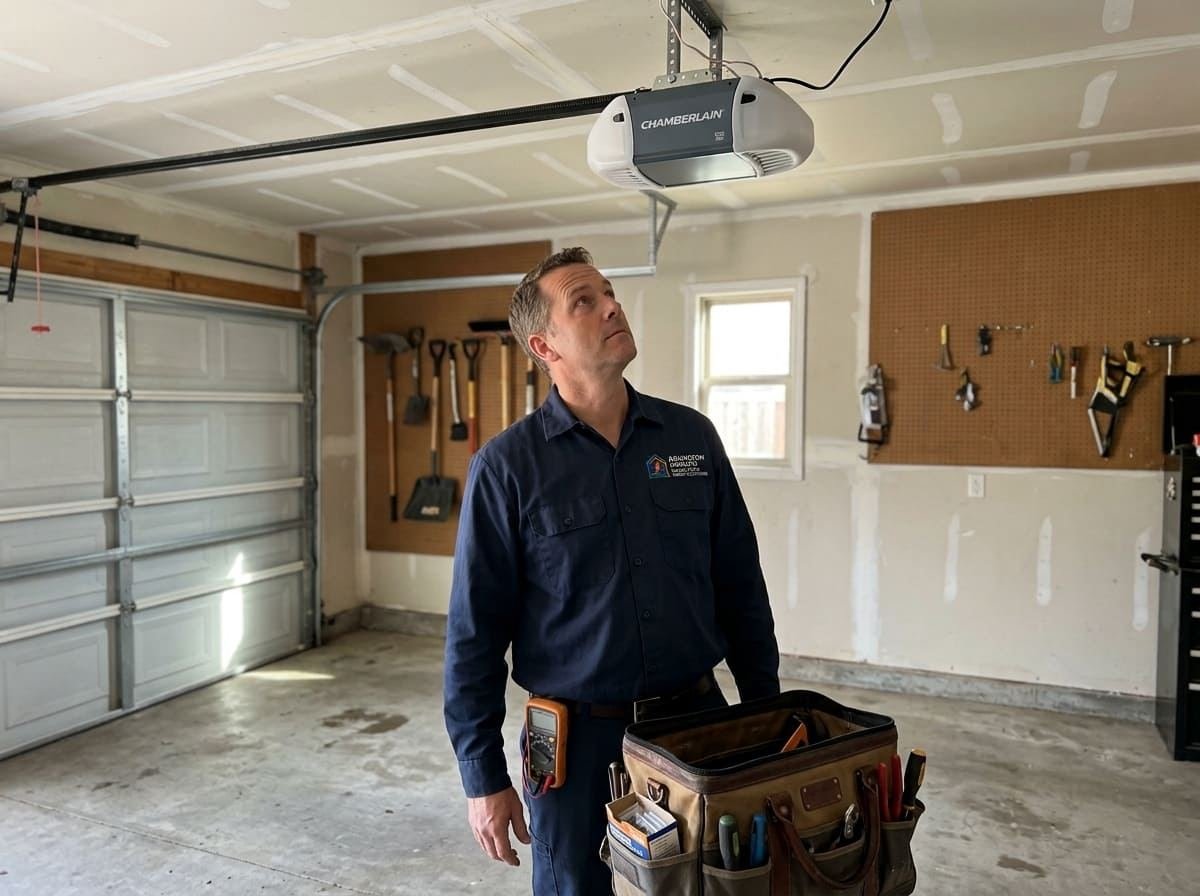
The two-minute triage
Does the opener light blink when you press close? Is anything near the floor either side of the opening? Are both sensor lights on? Does it close if you hold the wall button down? Will it stay closed if you pull the release and lower it by hand? Those five answers narrow it to two or three causes.
1. Photo eyes misaligned, dirty or blocked
Symptom. The door starts down, stops and runs back up. The opener light flashes, usually ten times. Hold the wall button down and it closes fine.
Why. Every opener made after 1 January 1993 must carry an external entrapment protection device, and on nearly all of them that is a pair of infrared sensors near the floor. Break the beam and the door must reverse. Those sensors sit in flimsy brackets at shin height in a room full of moving objects.
What to check. One sensor shows steady power; the other blinks or dies when alignment is lost. Wipe both lenses — a cobweb reads as an obstruction. Look along the beam for a bike wheel, a bin, a coiled hose. Nudge the bracket until the light is steady. If the fault only happens at one hour, low sun into the receiver is washing out the beam. LiftMaster specifies photo eyes no higher than 6 inches from the floor.
When to stop. If the indicator will not settle after cleaning and alignment, suspect the wiring: a staple through the run, a chewed conductor, corroded terminals. That is a call.
2. The close limit is set wrong
Symptom. The door goes all the way down, touches the floor or gets within an inch, then reverses. No flashing light.
Why. The opener does not know where your floor is. It knows how far to travel, and resistance before the end of that travel means something is underneath. Set the down limit slightly too low and the opener keeps driving after the door lands, reads the slab as an obstruction and reverses. It shows up after track, cable or spring work, after a slab heaves, and after a cold snap.
What to check. Watch where it gives up. A limit problem reverses at the floor; a force problem reverses partway down. That one observation splits the two.
When to stop. Limit adjustment is one of the few settings a careful homeowner can do with the manual open. If your unit programs limits electronically through a travel module, leave it.
3. The down force is too low for the door
Symptom. The door starts down and reverses partway, often at the same point, often only when it is cold.
Why. Under UL 325 and 16 CFR 1211, the operator must reverse within two seconds of an obstruction, detecting one by watching load. A stiff door — dry rollers, pinched track, hardened grease, weatherseal rigid at 5 °F — presents the same load signature. The opener is not faulty; the door has changed.
What to check. Pull the release with the door closed and lift by hand. A healthy door stays put at waist height. Dragging or binding means the fault is mechanical.
Do not solve this with the force dial
Turning the down force up until the door closes is the most common bad repair we undo. Nothing is fixed. You have raised how hard the door may push before reversing, and the obstruction the standard has in mind is a person. Fix the friction, then set force to the lowest value that runs the door.
4. The bottom seal is frozen to the slab
Symptom. A January morning. The door goes down, touches, comes back up. By afternoon it is perfect.
Why. Meltwater runs off the car, pools along the door line and freezes overnight. The astragal meets ice instead of concrete and the opener reads resistance early. GLISA at the University of Michigan puts the Great Lakes region at about 42 freeze–thaw cycles a year, and the NWS Chicago normals give O’Hare 38.4 inches of snow a year, 11.3 in January.
What to check. A ridge of ice along the threshold; an astragal squashed flat or split. Pour warm water, never boiling, along the seal line, then sweep the slab dry. A torn seal locks down harder every night, so replace it before the next freeze. More in why springs break in Chicago winters.
5. Something is physically in the way
Symptom. The door stops at the same height each time, sometimes with a scrape first.
Why. Usually the obvious thing: something leaning into the opening, a hose reel, a car parked a foot too far forward. The less obvious version is a roller partly out of its track, or track knocked out of plumb by a bumper, so the door binds where the roller reaches the damage.
What to check. Follow both vertical tracks with a flashlight, floor to curve, for rub marks, spread joints and dents. Check each roller stem sits square in its hinge.
When to stop. A roller out of track is not a homeowner fix. Levering it back puts the door out of square and can pull a section, turning a small job into off-track recovery and panel replacement. Bent track wants replacing, not hammering straight.
6. Lock mode on, or a remote with a stuck button
Symptom. Nothing from the remote, or the door opens and reverses in a loop for no reason.
Why. Most wall controls have a lock or vacation function that disables remotes, and it gets pressed by accident. The looping version is different: a remote with a jammed button under a car seat transmits continuously, and the opener reverses every time it starts to close.
What to check. Press the padlock icon on the wall console once. Then pull the batteries from every remote and keypad and run the door from the wall button alone. If the fault goes, reprogram them one at a time and leave the bad one out.
7. A slack or broken lift cable, or a broken spring
Symptom. The door sits crooked. A cable hangs loose off its drum, or there is a two-inch gap in a spring coil. The door feels enormously heavy by hand and the opener strains or runs without moving anything.
Why. The counterbalance carries the weight; the opener only overcomes friction. When a spring parts or a cable jumps its drum, the opener is asked to lift 150 to 250 pounds of dead steel, so it stalls or jams the door up crooked.
What to check. Look, and only look. Both are visible from the floor.
When to stop. Immediately. Unplug the opener and keep everyone out from under the door. Springs hold enough stored energy to break bones, and the bottom brackets anchoring the cables are under full load with the door closed. This is spring replacement and cable repair work; outside posted hours we run an emergency call-out.
8. The logic board or travel module has failed
Symptom. Erratic behavior with no mechanical explanation. It closes sometimes. Limits will not hold. The pattern changes week to week.
Why. An opener is a motor, a gearbox and a small computer. Lightning nearby, years of summer humidity and plain age take the electronics: relays weld, capacitors dry out, the module that remembers the floor loses the plot.
How to tell it apart. Every cause above gives a repeatable fault. Board failures give an inconsistent one. Clean eyes, good balance, no ice, remotes cleared, and the door still behaves differently on Tuesday than Monday: suspect the electronics.
When to stop. Worth a diagnosis, rarely worth a repair past about fifteen years: boards for older units are scarce and dear, and a unit that age is a generation behind on safety and security. If it is repairable, we repair it; if not, we say so before quoting a new opener.
Using the manual release safely
The red handle disconnects the door from the opener trolley. Two rules cover nearly everything that goes wrong.
Pull it with the door fully closed. The door is then resting on the slab and nothing is holding weight. Pulling the release on an open door hands the whole weight to the counterbalance, and if a spring is weak — exactly why people reach for the handle — the door can come down hard.
If you must release an open door — a power cut with the car inside — clamp locking pliers to the vertical track below the bottom roller on both sides first, so the door has something to sit on. Lower it slowly, a hand each side, with nobody in the opening. To reconnect, close the door and run the opener until the trolley re-latches.
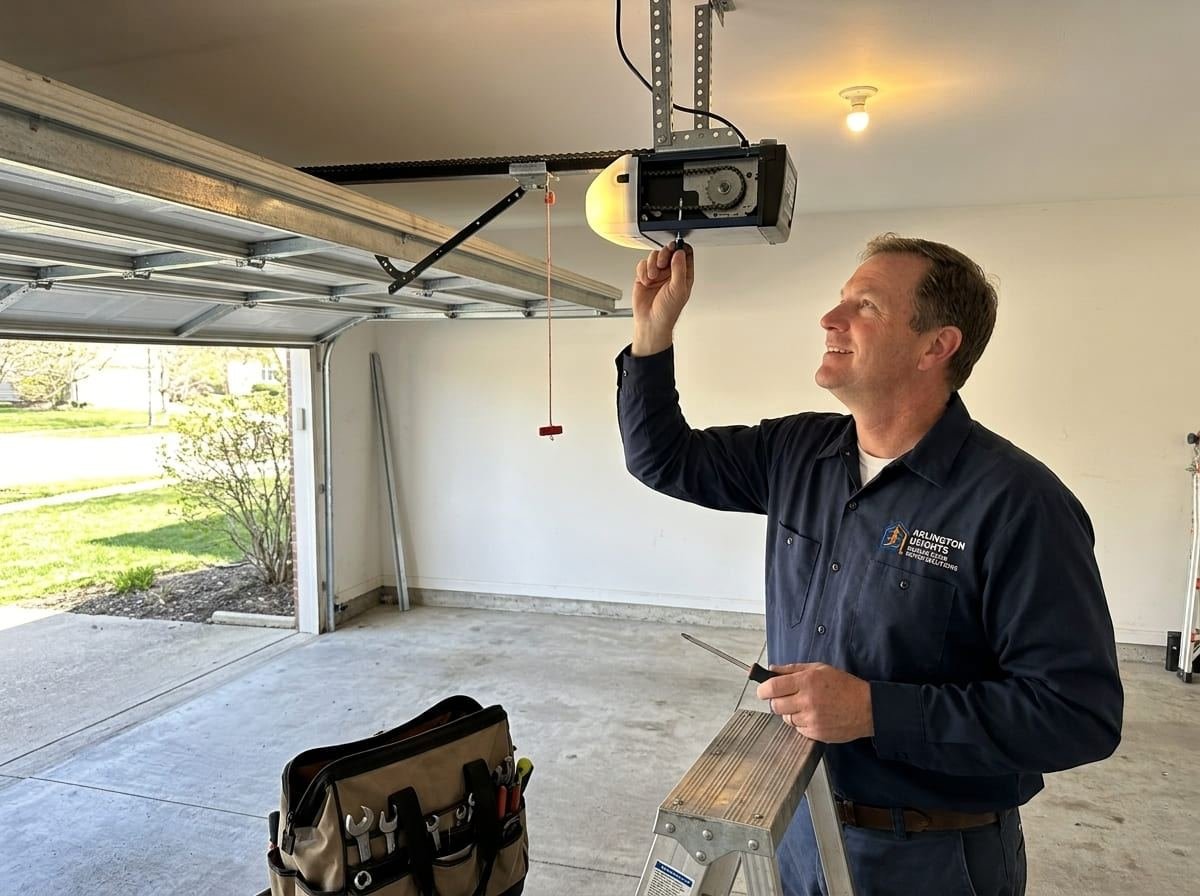
If yours is one of the five you can handle, good. Otherwise we cover Arlington Heights, Palatine and the northwest suburbs, and the common parts ride on the van. Send us the symptom, and run the 30-day safety check once the door closes again.
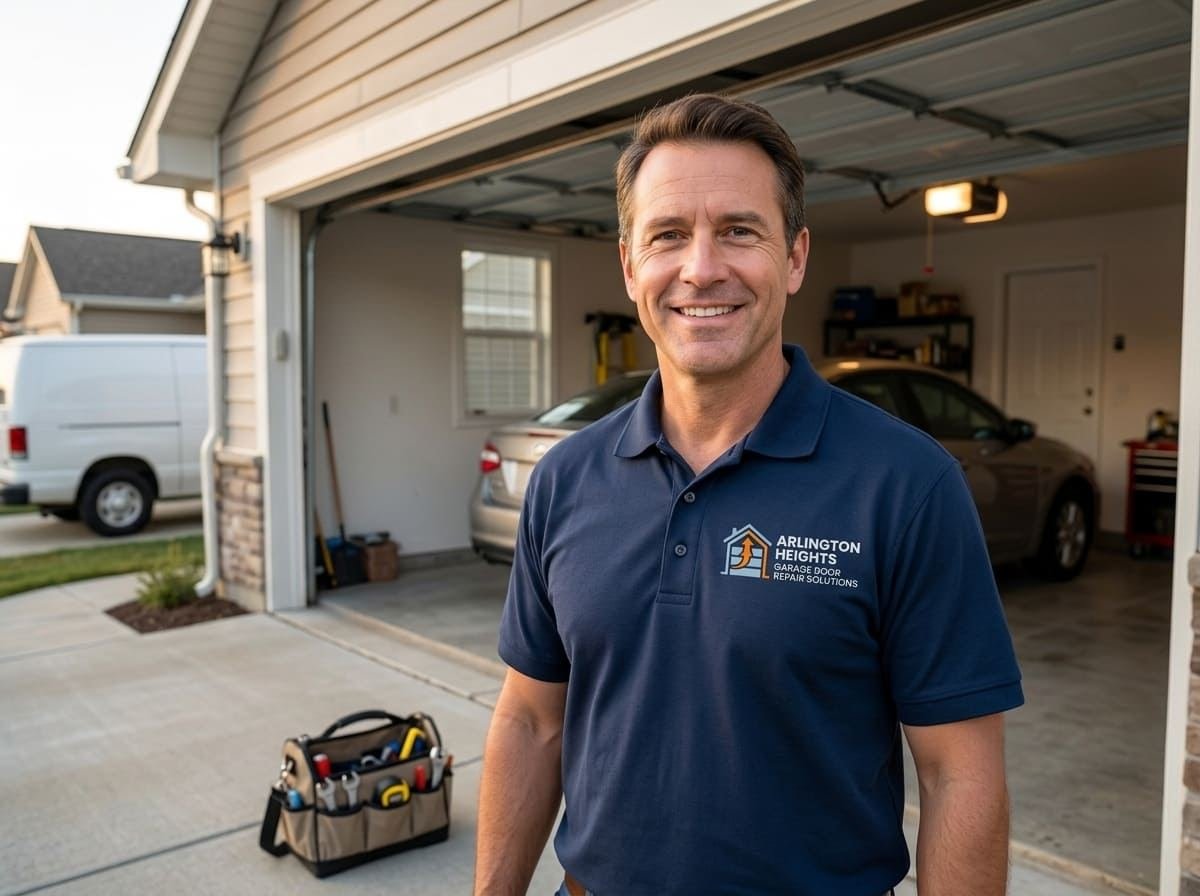
Dale Whitmore
Owner & Lead Technician
Thirty years in overhead doors, fifteen of them running this business from 60004. The first thing he checks is still the photo eyes.
Straight answers
Questions about doors that will not close
Why does my garage door close when I hold the wall button but not from the remote?
That is the photo eyes, almost every time. Holding the wall button is a constant-contact command, which overrides the sensors by design, so a door that closes that way and no other has a blocked, dirty or misaligned beam. Clean both lenses, clear the floor either side of the opening and align the brackets until the indicator is steady.
My door reverses right as it touches the floor. Sensors or settings?
Settings. Reversing at the floor points to the close limit: the opener is still driving after the door has landed and reads the slab as an obstruction. Reversing partway down points to force or friction. Sensor faults usually stop the door in the first foot of travel and flash the opener light.
Why does this only happen on freezing mornings?
Because ice under the bottom seal and cold-stiffened rubber both add load right where the opener watches for obstructions. The door meets that load, reverses within two seconds as required, and works normally by afternoon. Keep the threshold swept and dry and check the astragal for splits.
My door is crooked and one cable is hanging loose. Can I keep using it?
No. Unplug the opener and leave the door alone. A slack cable means the counterbalance is no longer loading both sides evenly, and running it pulls the door out of the tracks and bends sections. Cables get replaced as a pair, and if a spring has broken, both springs go too.
Still will not close?
Tell us what the door does and where. That usually names the part.