
Entrapment protection · CPSC
The 30-Day Garage Door Safety Check Every Homeowner Should Know
Your garage door is the heaviest moving object in the house, and the systems that stop it hurting somebody fail quietly. Four minutes and one offcut of lumber tell you whether yours still work.
Why thirty days, and not once a year
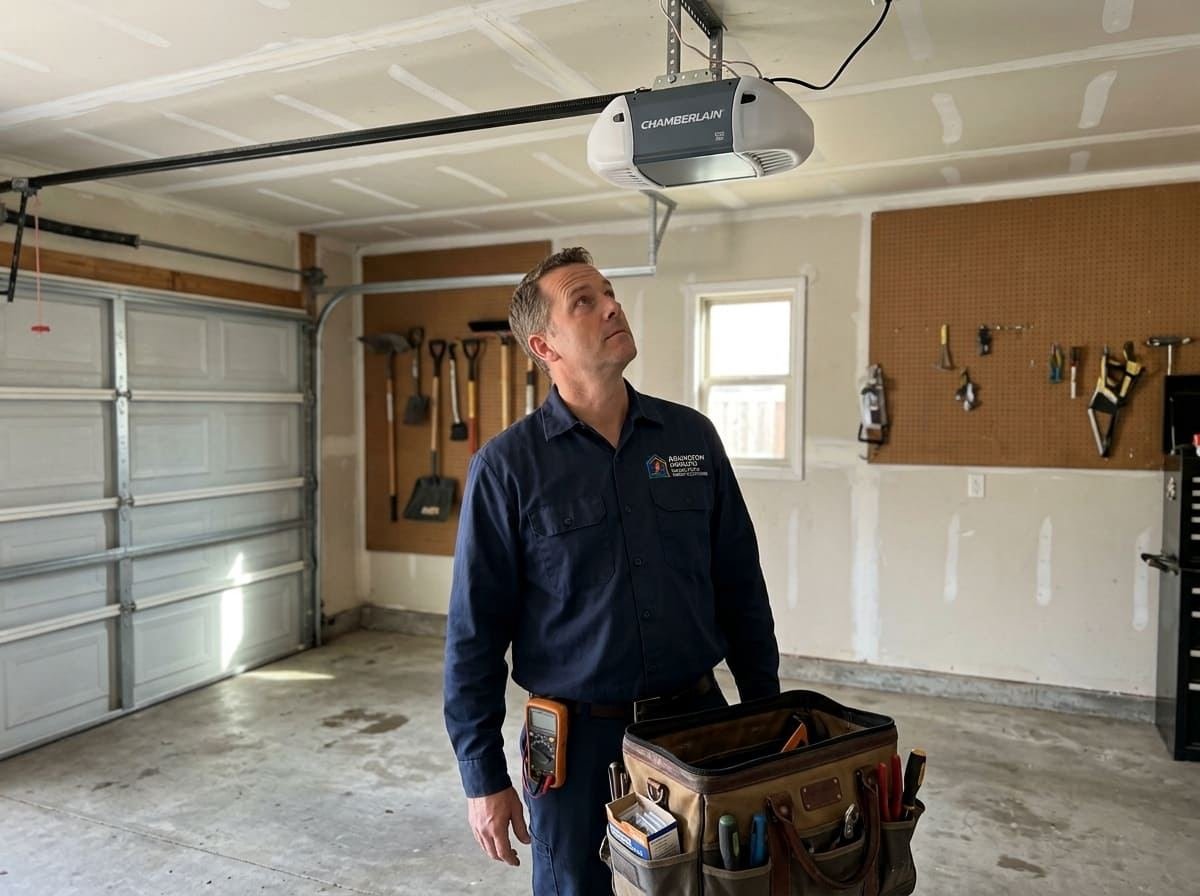
The interval is not something the trade invented. In its safety alert on garage doors and openers, the U.S. Consumer Product Safety Commission tells homeowners to inspect the system every 30 days, keep the door properly balanced, mount wall controls high out of children’s reach, and keep remotes away from children.
Monthly sounds excessive until you think about how these parts fail. A photo eye does not announce that a snow shovel nudged its bracket. Springs lose torque gradually, so the opener takes up the slack until the day it cannot. None of it produces a symptom you would notice from the kitchen, and all of it produces a door that no longer stops when something is underneath.
The documented numbers, and one that is not
CPSC records are blunt about why the federal rules exist. Approximately 73 children aged 2 to 14 have been killed under garage doors since 1982, an average of about three deaths a year, and other children have suffered brain damage and serious injuries when a door failed to reverse. The Commission’s 1993 news release on the final opener rules counted 54 at that point.
Now the part most articles get wrong. A figure of roughly 30,000 garage door injuries a year is quoted everywhere, usually with no citation. We looked for it in CPSC publications and the NEISS data releases and could not find it, so it is not in this article. The death figures above are documented and attributable, and they are reason enough.
What your opener is legally required to do
Three dates tell you most of what you need to know.
- After 1 January 1991
- Openers manufactured from this date must conform to the entrapment protection requirements of UL 325.
- After 1 January 1993
- Openers must also include either an external entrapment protection device — the photo eyes either side of the opening — or a constant-contact control that closes the door only while you hold the button.
- Today, under 16 CFR 1211
- Amended in 2018 to incorporate UL 325 seventh edition, the federal standard requires four things at once.
Per the Federal Register rule for residential garage door operators: an inherent reversing mechanism that reverses within 2 seconds of an obstruction; an external entrapment-sensing device; a 30-second backup clock that reopens the door if closing takes longer; and a manual detachment means — the red handle on your trolley.
One detail follows from that. LiftMaster, on its UL 325 safety page, specifies photo eyes mounted no higher than 6 inches from the floor. The reason is a child lying down, not standing up. Sensors bracketed at knee height are not doing the job they exist for.
The eight-point routine, in order
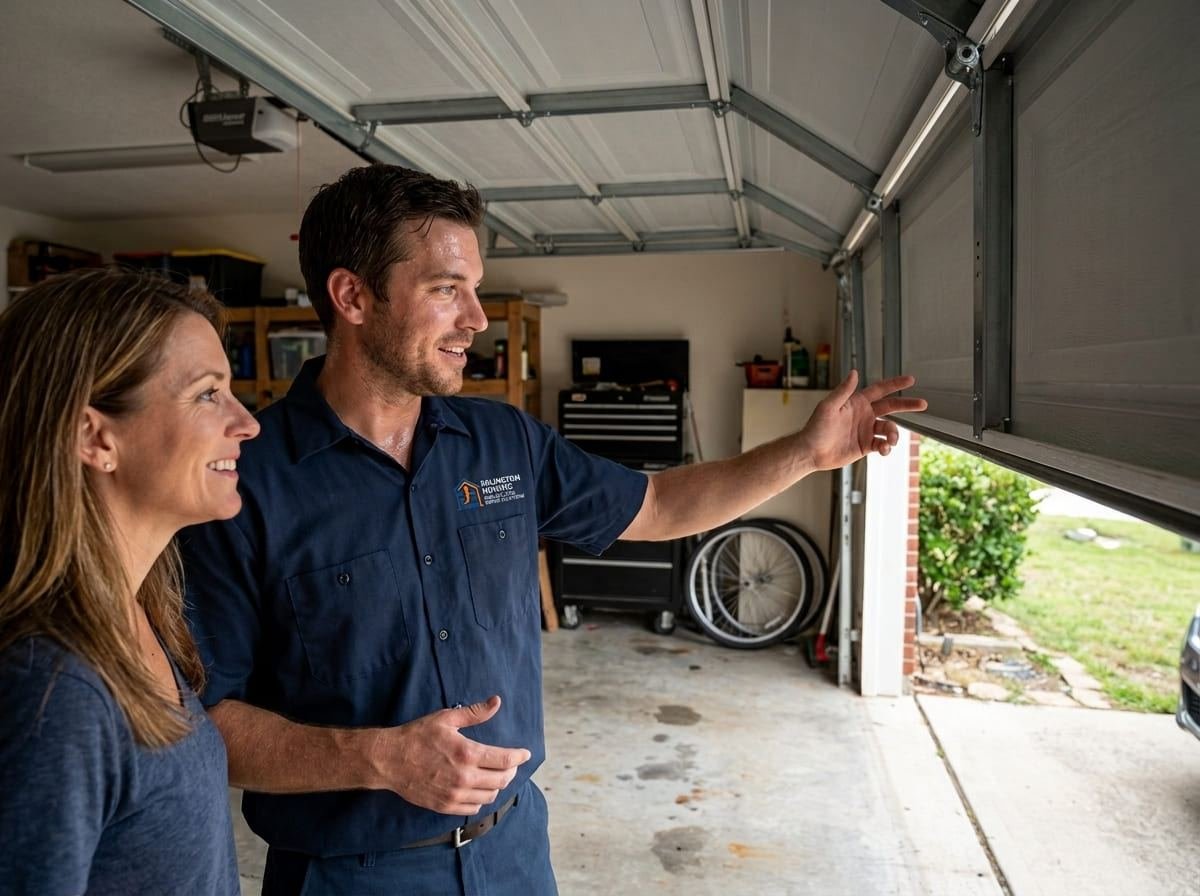
Run these with the opener plugged in unless a step says otherwise, and keep children and pets out of the garage. Order matters: check the door’s mechanical condition before asking its safety systems to protect anyone.
-
Look at everything, touch nothing
Door closed, two minutes of honest attention. Springs: gaps in the coils, rust, pitting. Cables: frayed strands, kinks, slack at the drum. Rollers: cracked tires, wobbling stems. Hinges, pulleys, brackets, lag bolts: anything loose, bent or missing. Note it rather than reaching for a wrench.
-
The balance test
Close the door, pull the release, lift by hand to waist height and let go. A balanced door stays roughly where you put it. Slides shut: the springs have lost torque. Runs up into the header: overwound. Either way the opener has been compensating, which shortens its life and defeats the force settings.
-
The photo-eye test
With the door open, press close and wave a broom handle through the beam near the floor. It must stop and reverse at once. Check the sensor bodies: one steady light, one indicator that blinks or dies when alignment is lost. Wipe both lenses. Cobwebs read as an obstruction, and so does low winter sun.
-
The 2x4 reversal test
The CPSC’s own test, quoted exactly: “Place a 2x4 on the floor of the garage in the door’s path. If the door does not properly reverse when striking the 2x4 then the garage door opener should be disengaged.” Lay the board flat and watch: contact, then reversal, inside two seconds. A door that stops dead has failed. One that keeps pushing has failed badly.
-
The down-force test
Different mechanism, different failure. Hold something firm but sacrificial — a box, a roll of carpet — under the closing door at waist height. It should reverse without you bracing against it. If you must push hard to stop it, the down force is set too high, and that is the setting that hurts people.
-
The emergency release
Pull the red handle with the door closed, confirm the trolley disconnects cleanly, lift by hand a foot or two. Everyone in the house should know where that handle is. Never pull it with the door up: the weight then hangs on the counterbalance alone.
-
Weatherseal and bottom seal
Check the astragal for splits, flat spots and lengths pulled out of the retainer, and the stop molding for gaps you can see daylight through. A torn seal lets meltwater under the door, and here that water freezes the seal to the slab and hands the opener a load it reads as an obstruction.
-
Wall control, remotes and keypad
The wall button belongs high, out of children’s reach and in sight of the door. Test the lock or vacation switch. Check remotes for stuck buttons, clear the code for any remote you have lost, change the keypad PIN if half the block knows it. A remote in an unlocked car is a key to your house.
Three things to leave completely alone
Springs, lift cables and the bottom brackets they anchor to. DASMA calls springs “the most important and most dangerous part” of a garage door, discourages DIY installation, says to replace both springs when one breaks, and recommends safety cables through extension springs so they cannot whip loose. The bottom bracket carries the full cable load with the door closed. Inspect all three, adjust none.
If it fails the test
A failure is not automatically an expensive day, but the door stops being used until it is sorted.
Failed the 2x4 test. Follow the CPSC line: disengage the opener, work the door by hand, get the reversing mechanism looked at. Do not simply turn the force down and retest until it passes. The opener is usually pushing hard for a mechanical reason, and the fix is track and hardware work or new springs.
Failed the balance test. Springs are matched to your door’s weight, so that is spring replacement work, not an adjustment you dial in.
Failed the photo-eye test. Clean the lenses and square up the brackets; that fixes most. If the indicator still will not settle, suspect a staple through the wiring run, a pinched conductor or the sensor itself. More in our guide to a garage door that will not close.
Frayed cable or damaged spring. Stop using the door and call. A cable failing on one side drops a corner and takes the door off its tracks, turning a cable repair into an off-track recovery.
Openers older than the rule they should meet
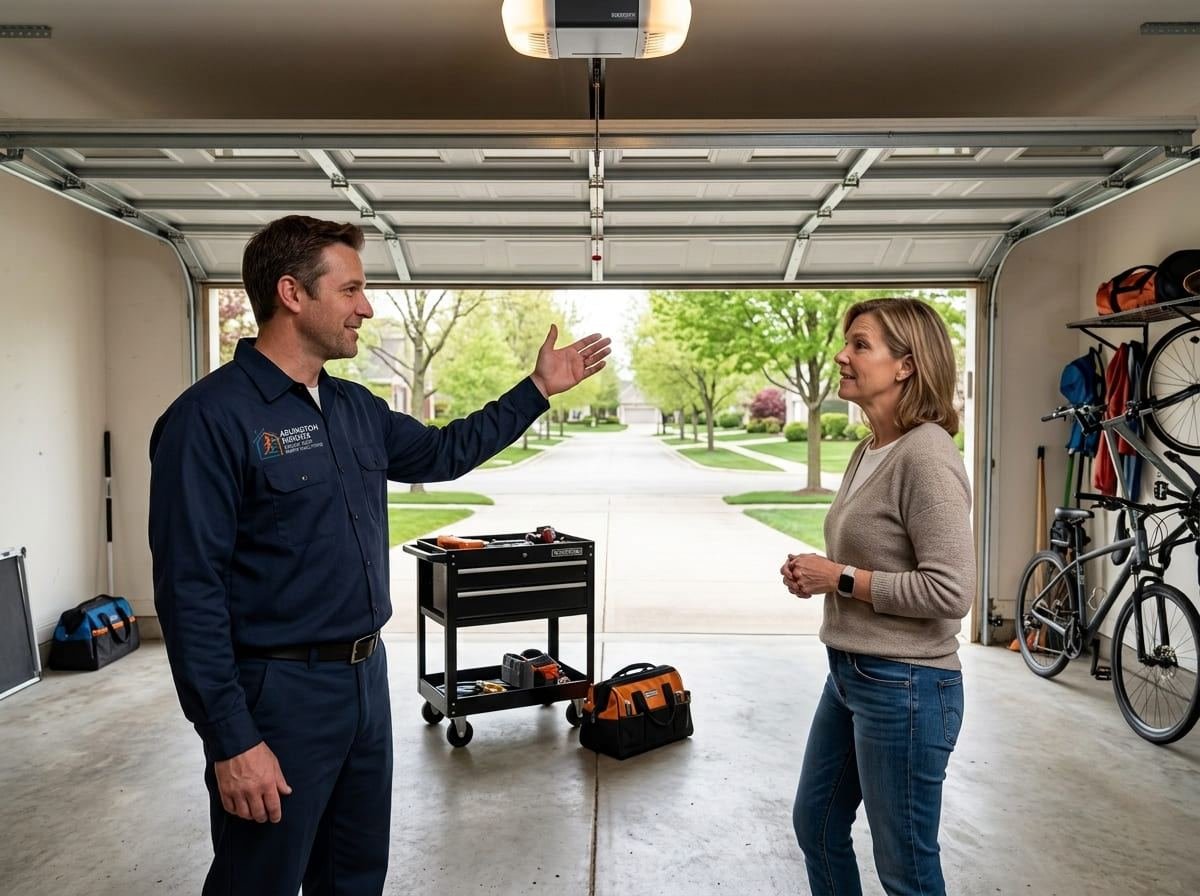
This matters more here than in a newer suburb. Roughly 64% of Arlington Heights homes were built before 1980, and the median local home was finished in 1974. Such a garage has had its opener replaced once or twice at most, and we still find units predating the January 1993 entrapment protection requirement: no photo eyes, no brackets, one button on the wall. One layer of protection, and no way of knowing a child is underneath.
Most pre-1993 units cannot take photo eyes in any manufacturer-supported way. If yours has no sensors at the floor, the conversation is about a new opener, not this month’s 2x4 test. We do that work across Arlington Heights and Rolling Meadows, where the Kimball Hill houses are older still. More in our piece on the village’s pre-1980 housing stock.
The monthly check is yours; the annual service is ours. DASMA’s maintenance guidance pairs the two, because spring torque, cable tension and opener force limits need instruments. Book a visit and we will run all of it.
Dale Whitmore
Owner & Lead Technician
Fifteen years installing overhead doors before founding this business in 2011. He has disengaged more non-reversing openers than he cares to count.
Straight answers
Safety check questions we get asked
How often should I really test my garage door?
Every 30 days, per the CPSC’s own garage door safety alert. The routine takes under ten minutes the first time and about four once you know the order. Pair it with an annual professional service: spring torque, cable tension and opener force limits need measuring, not eyeballing.
What size piece of wood do I use for the reversal test?
A standard 2x4 laid flat on the slab in the door’s path, exactly as the CPSC describes it. Flat, not on edge: it represents a low obstruction, and the door should strike it and reverse within about two seconds. A short offcut is fine so long as the section meets it squarely.
Can I pull the emergency release while the door is open?
No. With the door up, the whole weight rests on the counterbalance, and disconnecting the trolley removes the only thing restraining it if a spring is weak. Pull the release with the door fully closed. If a power cut forces your hand, clamp locking pliers to the track below the bottom roller on both sides first.
My opener has no photo eyes. Is that legal?
An opener made before 1 January 1993 was not required to have an external entrapment protection device, so an old unit without sensors breaches nothing by existing. It is still a door with one layer of protection instead of two, and most pre-1993 units cannot be retrofitted in a manufacturer-supported way. Replacement is usually the honest answer.
Failed a check? Book the door in.
Same-day service on most repairs, with the full safety routine run before we leave.