
Diagnosis by ear · Arlington Heights, IL
Noisy Garage Door Repair in Arlington Heights, IL
The door is telling you what is wrong with it. Grinding is not rattling, and neither is the bang of an unbalanced door dropping the last twelve inches. Name the sound accurately and you are most of the way to the diagnosis.
Read the symptom
What you hear, what it usually is, what it needs
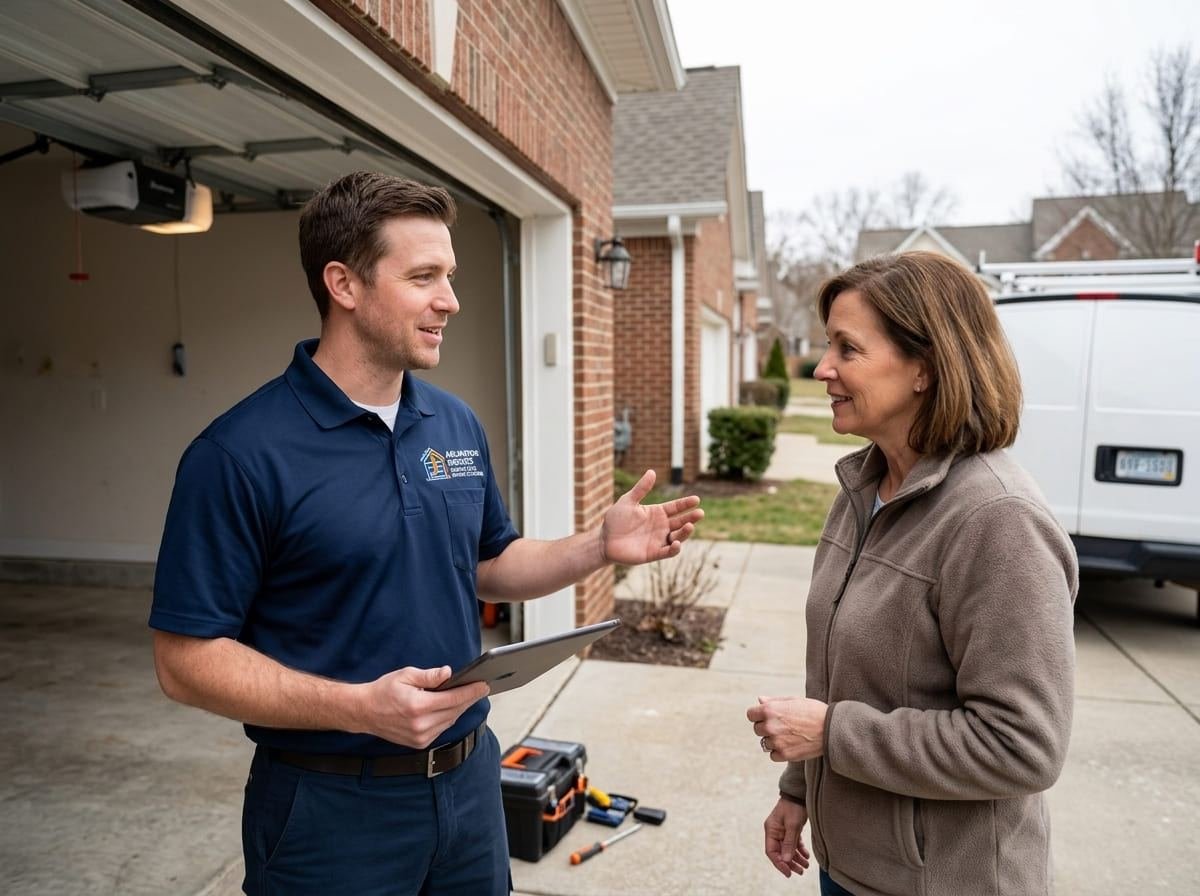
Most noisy garage door repair calls in Arlington Heights open with a homeowner doing an impression down the phone. That is useful. A sectional door has perhaps eight noise sources, none of which sound alike, and the one you hear narrows the job before anybody opens a toolbox.
| What you hear | What it usually is | What it needs |
|---|---|---|
| Grinding, gravelly, sand in a bearing | Worn plain-steel rollers, or bearings run dry and shedding their cages. The wheel drags rather than rolls. | Roller replacement. Steel out, sealed-bearing nylon in. |
| Rattling, like a loose panel in wind | Loose hinge and bracket fasteners and track bolts. Vibration walks fixings out of tension. | Every fastener torqued. Elongated holes get new fixings, not a harder turn. |
| Squealing on travel | Dry hinge pivots and roller bearings, or a dry torsion bearing plate. | The right lubricant in the right places. A bearing dry enough to score is past saving. |
| A bang as it opens or closes | An unbalanced door with tired springs, so the counterbalance no longer matches the weight. Or a slack chain snapping taut. | Balance test first, then spring work or chain tensioning. Never the chain alone. |
| Popping and snapping | Dry or seized hinge pivots letting go under load, or sections binding as the door goes out of square. | Hinges freed or replaced, track alignment checked at each bracket. |
| A rhythmic thump, once per revolution | A flat-spotted roller. The wheel has worn a chord onto itself and lands on it each turn. | Replace it, and the rest with it. |
| Screeching from the torsion tube | Dry or failing end bearing plates and center bearing. The shaft is turning in something that stopped being one. | Bearings replaced while the springs are unwound. Cheap part, expensive place to work. |
| A chain slapping the rail | A worn drive sprocket, a stretched chain, or both. Slack chain whips on every start and stop. | Chain retensioned, sprocket and rail checked for wear. |
| A whining motor | Bearing wear inside the opener, or an opener straining against a door grown too heavy for it. | Balance test first, then opener repair. |
| Vibration through the ceiling into the room above | An opener bolted rigidly to the joists, feeding chain pulses into the bedroom floor. | Isolated mounting, often a change of drive type. Solvable, though most assume otherwise. |
The quiet-door upgrade path, in order of value
In this order it buys the biggest drop in noise for the least money, which is why buying a new opener first usually fixes nothing.
1. Nylon rollers with sealed bearings
The single biggest change available. Builder-grade doors of the 1960s and 1970s came with plain steel rollers on exposed stub axles, and after fifty Illinois winters they are the loudest part of the door. In Ivy Hill or Surrey Ridge this is often the whole fix.
2. Correct lubrication, in the right places
Cheap, quick, and done wrong more often than right. See the panel below.
3. Every fastener tightened to spec
Hinge screws, roller bracket bolts, track bolts, and the lag screws holding the horizontal track hangers into the joists. Where a hole has gone oval, fit a new fixing into sound material.
4. Worn hinges replaced
Hinge pivots wear oval too, letting sections shift against each other. That is the popping, and the reason a door starts tracking crooked. Hinges are numbered 1 to 4 by position and are not interchangeable.
5. Spring balance checked
An unbalanced door makes noise everywhere else: rollers loading one track, the opener working harder, the chain snatching. Fix the counterbalance and several unrelated noises stop.
6. Opener mounting isolated
Rubber isolators between the motor and its straps, and between the straps and the joists, break the path carrying vibration into the structure. Small parts, obvious result.
7. Belt drive, or a wall-mount jackshaft
Where a bedroom sits over the garage, and here it often does, this is the endgame. A belt removes chain noise; a jackshaft mounts beside the torsion tube, off the joists entirely. Both are opener installation jobs.
Lubrication: what goes where, and what never does
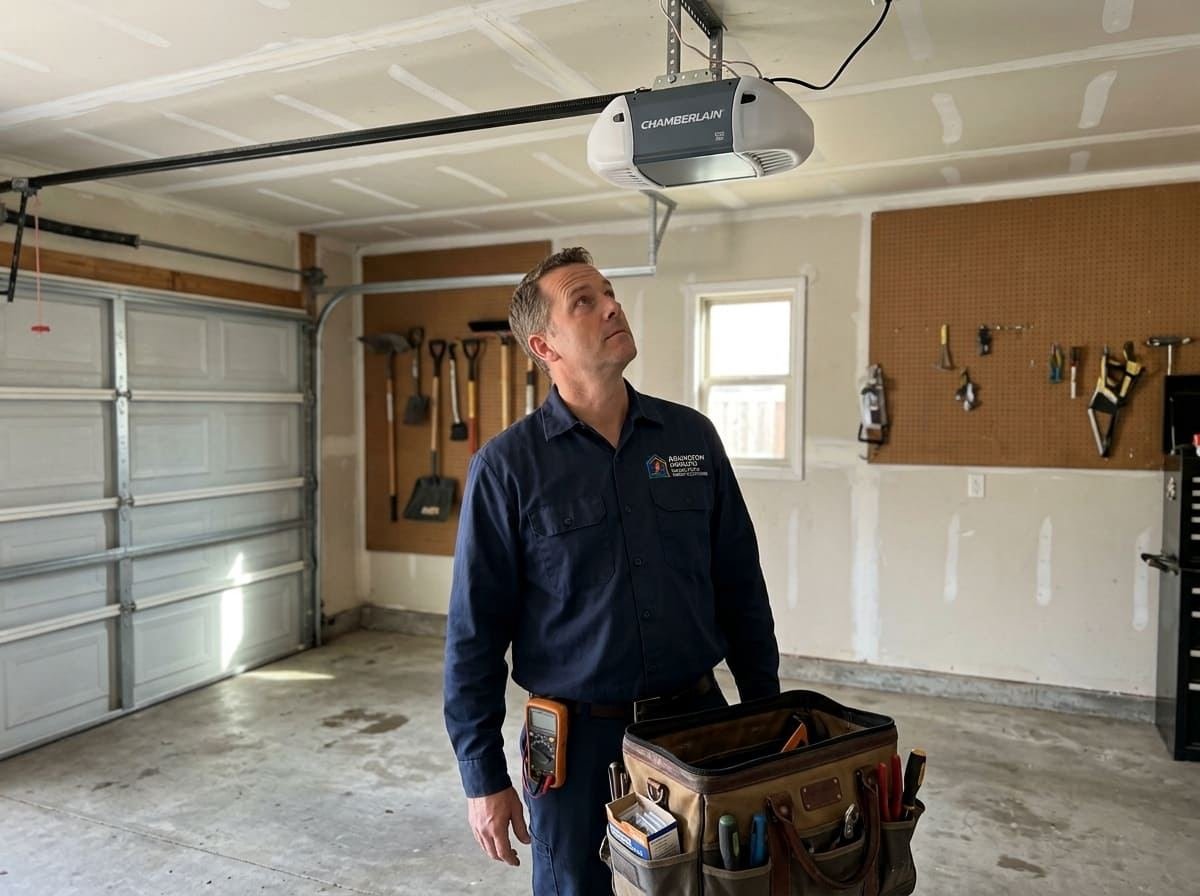
Use a light lithium or silicone spray on hinge pivots, roller bearings, springs, and the torsion bearings at each end plate and the center.
Never grease the track: it is a running surface, and grease there collects grit and becomes a lapping compound. Never lubricate the nylon wheel of a roller, only its bearing. And never use WD-40 as the lubricant: it is a solvent that thins and carries away whatever is already in the joint.
A door that suddenly got noisy is telling you something changed
Gradual noise is wear. Sudden noise is an event: a spring lost tension, a cable slipped its drum groove, a roller shed a bearing, or the door went out of square.
The manual balance test finds out which, in two minutes. Close the door, pull the red release, lift by hand to waist height and let go. A balanced door stays put or drifts an inch. One that slams down has lost spring tension; one that pulls itself up is overwound. Skip the test if a spring is broken or a cable is slack: the release will simply drop the door. Call for an urgent visit instead.
On the visit
What a noise call involves
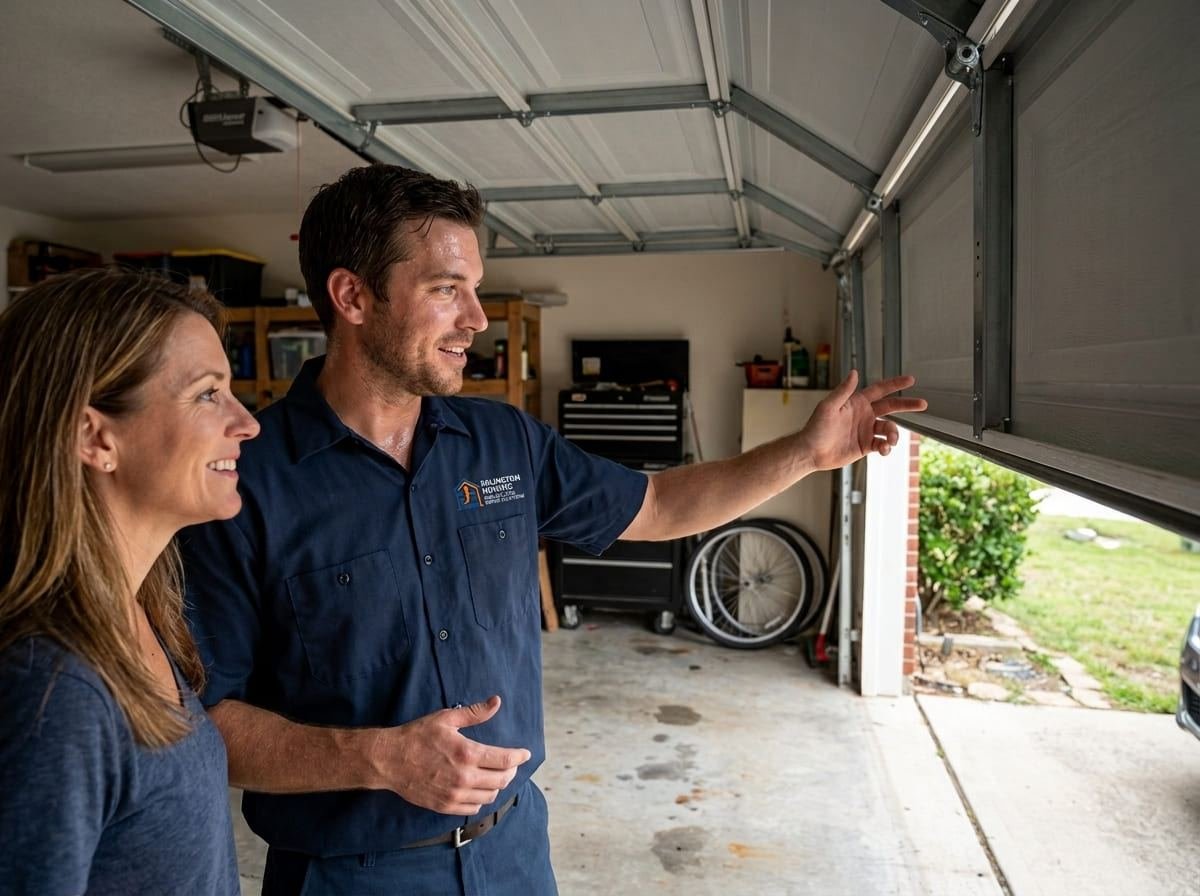
We run the door with the opener connected, then with it disconnected. That one step separates door noise from opener noise, and the answer is often the opposite of what everyone assumed.
Then every roller comes out and gets spun by hand, hinges checked for oval pivots, fasteners tested, bearings felt for roughness. You get told what is making each noise, ranked by the difference fixing it makes. If half of it can wait, we say so. How we work · hours and service area.
Straight answers
Noisy garage door questions
Is a noisy garage door dangerous, or just annoying?
Depends which noise. Squealing is maintenance. Banging usually means the counterbalance no longer matches the door’s weight, and that puts load into cables, brackets and the opener that none were sized for. The CPSC recommends inspecting the system every 30 days and keeping the door balanced.
Will new rollers fix the noise on their own?
Often most of it. On a 1970s door with original steel rollers, sealed-bearing nylon takes out the grinding and much of the rumble. It will not fix a rattle from loose fasteners, a bang from tired springs, or vibration reaching the bedroom through a rigid opener mount. Rollers first, then the list in order.
Can I just spray WD-40 on everything?
Please do not. It is a water-displacing solvent, so it thins and washes out whatever lubricant is left in a hinge or bearing. The quiet lasts a fortnight and the part ends up drier than before. Use a light lithium or silicone spray on hinge pivots, roller bearings, springs and torsion bearings. Keep it out of the track.
There is a bedroom above our garage. What actually works?
Three things, in order. Isolate the opener mounting so vibration stops traveling into the joists. Fit sealed-bearing nylon rollers. Then change the drive: a belt removes chain noise, and a wall-mount jackshaft takes the motor off the ceiling entirely. In two-story Arlington Heights homes we fit a lot of jackshafts for exactly this reason.
How often should a garage door be lubricated?
Twice a year suits most doors here, timed for late fall before the cold arrives and again in spring. DASMA’s maintenance guidance pairs regular owner checks with annual professional servicing. If the garage is your household’s main way in and out, quarterly is better.
Do you diagnose noise outside Arlington Heights?
Yes, across the same radius as everything else, including Palatine, Buffalo Grove and Prospect Heights. Noise work travels well because the hardware repeats: the northwest suburbs were built out in the same decades with the same builder-grade doors. For what a fifty-year-old local garage needs, our piece on 1970s Arlington Heights garage doors runs the list.
Tell us what it sounds like
Grinding, banging, squealing, a thump you can count, or a rumble that carries upstairs. Any of those gets us there with the right parts.
Mon–Fri 7am–7pm · Sat 7am–5pm · Emergency call-out outside those hours