
Garage door roller repair · Arlington Heights, IL
Garage Door Roller Repair in Arlington Heights, IL
Ten small wheels carry a couple of hundred pounds of door up a steel track, thousands of times a year. They are the cheapest parts on the assembly and the ones most likely to be quietly destroying the expensive ones.
- Steel and sealed nylon on every van
- Stem length and diameter matched to your hinges
- Hinges and track checked at the same time
Know what you have
Three kinds of roller, and why yours grind
Look at the wheel beside the third hinge. It is one of three things, and which decides how the door sounds and how long the rest lasts.
| Roller | How it runs | What it does to the door | Where it belongs |
|---|---|---|---|
| Plain steel, no bearings | A solid wheel on a bare stem. Metal on metal. | Grinds, wears its stem oval, then stops turning and skids. | Nowhere now, though it was the builder fitment in most 1960s and 1970s garages here. |
| Steel, ball bearings | Ten or eleven unsealed balls in a race. | Rolls well while clean. Open races collect grit and salt, then seize. | Heavy doors and commercial units where nylon would overload. |
| Nylon, sealed bearings | A nylon tire over a sealed cartridge. No metal on the track. | Markedly quieter, with no vibration fed into the joists. | Any residential door, and the obvious call with a bedroom above the garage. |
One caveat: cheap nylon rollers with unsealed bearings are barely better than the steel they replace. The bearing matters more than the tire.
The detail installers get wrong
Stem length, stem diameter, and binding
A roller is a wheel on a shaft, and the shaft has to suit its hinge. Residential doors typically run a two-inch wheel on a seven-sixteenths-inch stem, but stem length varies with hinge position and track. A long stem is not a universal upgrade.
Too short and the wheel sits close to the door face, rides the inner lip and climbs. Too long and it tilts under load and scores the track face. Either way the door binds, the opener reads the drag as resistance, and you get reversals nobody can explain. Top rollers add a wrinkle: their brackets also set how firmly the top section seals at the header.

Four minutes, no tools
Before you book garage door roller repair
Door closed, opener unplugged, hands off springs and cables.
Look at the wheels
Chipped nylon, a flat spot on steel, or a wheel polished bright on one side. It has stopped rolling and started sliding.
Spin each one
A good roller turns with a fingertip and coasts. A seized one will not turn; a dry one crunches.
Rock the stem
Side play means a worn stem or an elongated hinge hole; the two arrive together.
Watch it run
A wheel riding up the track face, or one that stops turning at the curve, shows the problem.
The bracket never to unbolt
The bottom roller sits in the bottom bracket, which also carries the lift cable and is under full spring tension whenever the door is down. Undo those bolts and the bracket leaves the section with that energy behind it. Every other roller can be checked from the ground; that one is ours. See what happens when a cable lets go.
The chain reaction
What a worn roller costs you somewhere else
Rollers are never the most expensive thing they break.
It loads the hinges
A wheel that skids drags sideways on its stem, elongating the hinge hole and tearing the hinge out of the section skin.
It wears the track
A flat-spotted wheel hammers the track and polishes a groove into it. Once the rail is scored or flared, new rollers alone will not run smoothly and you are into track repair.
It overworks the opener
Drag is force, and force settings have limited headroom. Openers strip their drive gear lifting more than they were rated for, which is why many opener failures are door failures.
DASMA’s maintenance guidance puts moving hardware alongside the monthly checks the CPSC recommends. Rollers are the part of that list you can hear failing.
Do this right and you buy years
Lubrication, and what people get wrong
Worth lubricating
- Steel roller bearing races, a light shot of white lithium or silicone
- Hinge pivots, one drop each, wiped back
- Torsion spring coils and the end bearing plates
- The opener rail, with the grease its maker specifies
Leave alone
- Nylon wheels. Lubricant makes the tire slip rather than roll
- Sealed bearings. Spray only attracts grit
- The track face, always. It is a running surface, not a bearing
- Grease in the track, a salt-and-dust paste by March
Why the track stays dry
The wheel is meant to roll, not slide. Oil the rail and you remove the friction the roller needs to start turning, so it skids, wears flat faster and collects grit. Wipe the track clean with a rag. That is the whole procedure.

Best money on an old door
The upgrade we recommend most often
If you own one of the roughly 64% of Arlington Heights homes built before 1980, your door may still run the plain steel rollers the builder specified. The median build year here is 1974.
A full set of sealed-bearing nylon rollers is the least expensive meaningful upgrade on those doors. The grinding stops, and so does the vibration through the ceiling, which decides whether a bedroom above the garage is usable at 6am. The hinges stop being dragged sideways too.
It also buys information: handling every hinge shows what else is coming. If the door is finished we say so and talk about a new one. More in our piece on fifty-year-old Arlington Heights garages.

Dale Whitmore
Owner & Lead Technician
Thirty years on overhead doors, fifteen running this business from N Ridge Ave. Registered with the Village of Arlington Heights; more on the about page.
Roller questions
What homeowners ask us about rollers
How many rollers does a garage door have, and do you replace them all?
A standard four-section door carries ten: two per section plus the two top rollers. We replace the set. Mixing old with new leaves the door on two diameters and two levels of drag, which defeats the point.
Will nylon rollers actually make the door quieter?
Noticeably, provided the bearings are sealed and the door is otherwise sound. Nylon removes metal-on-metal contact and damps what travels up through the joists. If the noise is a bang rather than a grind, see our noise diagnosis.
Can I replace garage door rollers myself?
The middle rollers are the least dangerous job on the door. The bottom roller is not: its bracket carries the lift cable under full spring tension. Getting the stem length wrong is the other common outcome, and a binding roller does more harm than a worn one.
How often should rollers be replaced?
Condition decides, not the calendar. Plain steel rollers on a door used four times a day are usually finished inside ten years, faster in a garage that sees road salt. Sealed nylon lasts far longer. Spin them by hand each season.
Do you carry rollers on the van?
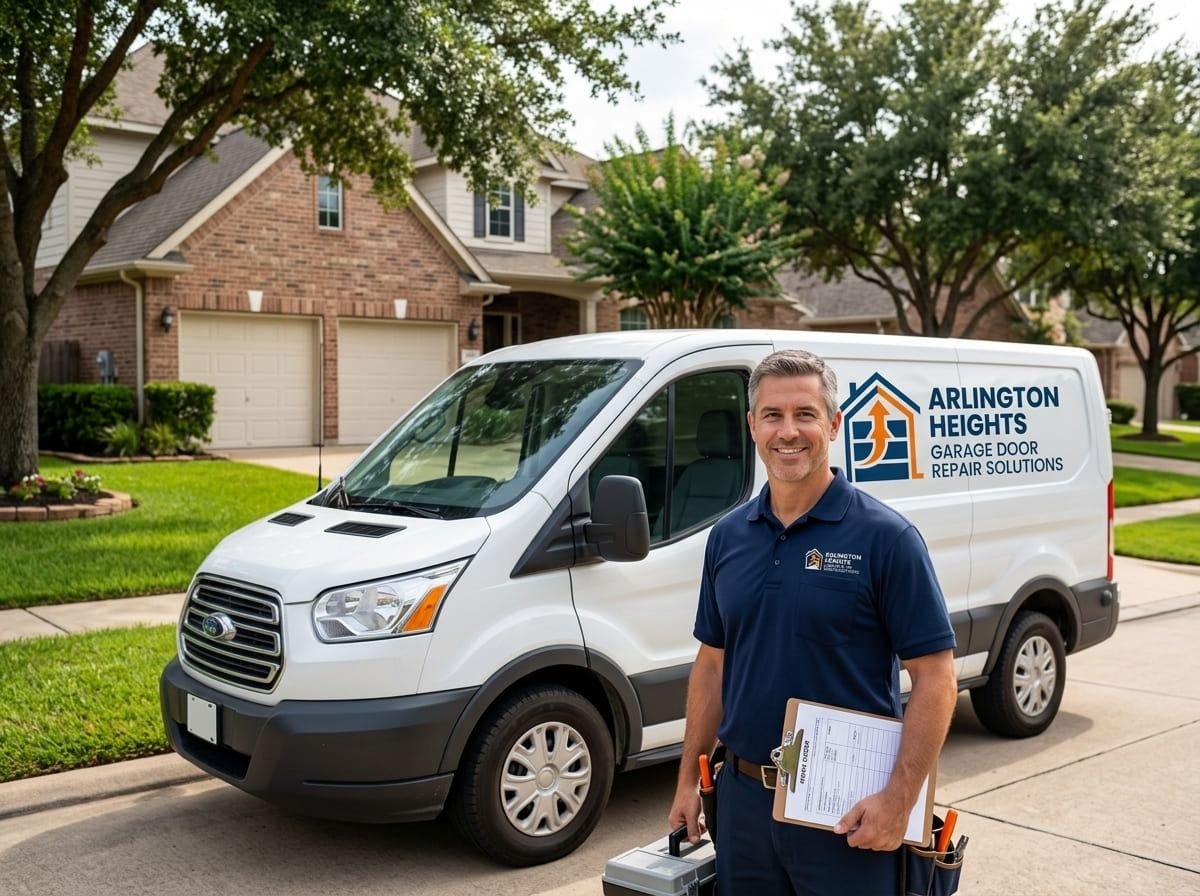
Yes, steel and sealed nylon in the stem sizes that fit doors across Arlington Heights, Buffalo Grove, Palatine and our wider service area. It finishes on the first visit.
Stop the grinding this week
Tell us the age of the door and whether the noise is a grind, a squeal or a bang. Roller jobs are quick and the parts are on the van.
Mon–Fri 7am–7pm · Sat 7am–5pm · Emergency call-out outside those hours